
ADS-B In vs ADS-B Out: What the Rule Requires and What a Portable Receiver Does
ADS-B Out vs ADS-B In from 14 CFR 91.225 and the FAA: where ADS-B Out is required, 978 UAT vs 1090ES, and what a portable ADS-B In receiver can and cannot do.
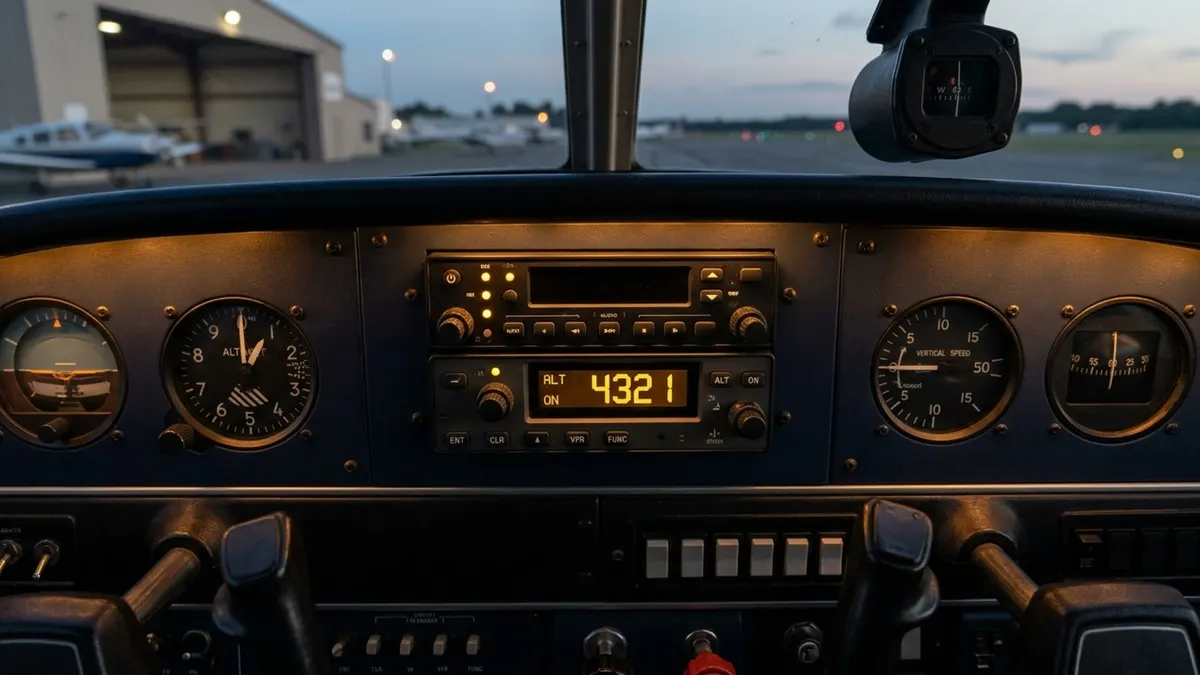
Affiliate disclosure: product links on this page go to Amazon or to the maker's own store. As an Amazon Associate we earn from qualifying purchases, at no extra cost to you; links to makers' own stores earn us nothing. No retailer or brand sees our picks before they are published or has any say in them. How we choose.
ADS-B Out is a transmitter: it broadcasts your aircraft's GPS position, altitude and identity, and since January 1, 2020 the FAA has required it in most controlled airspace under 14 CFR 91.225. ADS-B In is a receiver: it shows you other aircraft and the FAA's free weather broadcasts. A portable receiver like a ForeFlight Sentry or a Stratux is ADS-B In only, so it does nothing to meet the rule. Below is where ADS-B Out is required, which frequency you need, and what an In-only setup will and will not show you.
ADS-B Out: the part the rule requires
ADS-B stands for Automatic Dependent Surveillance-Broadcast. The FAA explains the name: automatic because it transmits with no pilot action, dependent because position comes from GPS or another navigation source, surveillance because it gives a three-dimensional position and identity, and broadcast because anyone with the right receiver can hear it.
Under 14 CFR 91.225, after January 1, 2020, unless air traffic control authorizes otherwise, you need ADS-B Out equipment in this airspace:
| Airspace | ADS-B Out required | Frequency allowed |
|---|---|---|
| Class A | Yes | 1090 MHz only |
| Class B and Class C | Yes | 1090 MHz or 978 MHz UAT |
| Within 30 NM of the airports listed in appendix D (the "Mode C veil"), surface to 10,000 ft MSL | Yes | 1090 or UAT |
| Above the ceiling and within the lateral limits of a Class B or C area, up to 10,000 ft MSL | Yes | 1090 or UAT |
| Class E in the 48 contiguous states and D.C. at and above 10,000 ft MSL, excluding at and below 2,500 ft AGL | Yes | 1090 or UAT (UAT only below 18,000 ft) |
| Class E over the Gulf of Mexico at and above 3,000 ft MSL, within 12 NM of the coast | Yes | 1090 or UAT |
The equipment has to meet a Technical Standard Order: TSO-C166b or C166c for 1090 MHz extended squitter, or TSO-C154c or C154d for 978 MHz UAT, plus the performance requirements of 91.227. Once installed, it must transmit at all times, except where the FAA authorizes otherwise for certain sensitive government missions or where ATC directs it.
Aircraft without electrical systems
Aircraft not originally certificated with an engine-driven electrical system, and not since certified with one (91.225 gives balloons and gliders as examples), may fly without ADS-B Out in the Class E airspace at and above 10,000 feet, and inside the 30 NM veil only outside Class B and C and below the lower of their ceilings or 10,000 feet MSL.
978 UAT or 1090ES?
If you ever fly in Class A airspace (18,000 feet MSL and above), you need 1090 MHz. If you stay below 18,000 feet in the US, either works. UAT has one practical advantage: the FAA's FIS-B weather is broadcast only on 978 MHz, so a UAT installation that includes ADS-B In receives weather on the same link.
ADS-B In: what you can see
ADS-B In is optional. The FAA provides three services to receivers, and they behave differently:
- FIS-B (Flight Information Services-Broadcast): weather and aeronautical data, always broadcast on 978 MHz UAT and not on 1090. Products include METARs, TAFs, CONUS and regional NEXRAD, AIRMETs, SIGMETs, PIREPs, NOTAMs and special use airspace status.
- TIS-B (Traffic Information Services-Broadcast): radar-derived positions of aircraft that are not ADS-B equipped. A target must have a transponder and be in radar coverage. The FAA calls it a client-based service provided to aircraft equipped with ADS-B Out and In.
- ADS-R (ADS-B Rebroadcast): relays aircraft broadcasting on one frequency to receivers on the other, so a UAT receiver can see a 1090 aircraft and vice versa. Also client-based.
What a portable receiver does and does not do
A dual-band portable receiver hears every aircraft broadcasting ADS-B Out on 978 or 1090 MHz within range, and FIS-B weather on 978 MHz. Because TIS-B and ADS-R are client services for aircraft with ADS-B Out and In, a portable receiver in an aircraft without ADS-B Out cannot rely on them. In practice that means the traffic display can miss aircraft that are only visible to radar. Treat it as an aid to seeing traffic, not a complete picture, and keep scanning outside.
| Setup | Meets 91.225? | Weather (FIS-B) | Traffic |
|---|---|---|---|
| Portable receiver only | No | Yes, if it receives 978 | Direct ADS-B Out broadcasts; TIS-B and ADS-R not assured |
| Installed ADS-B Out only | Yes | No | None displayed |
| Installed ADS-B Out plus a portable receiver | Yes | Yes | Direct broadcasts plus client services |
| Installed ADS-B Out with built-in In | Yes | Depends on the unit | Direct broadcasts plus client services |
If your ADS-B Out fails, or you have none
91.225(g) lets you ask air traffic control for a deviation. With an inoperative ADS-B Out, the request to fly on to your destination or to a place where it can be repaired may be made at any time. For an aircraft with no ADS-B Out at all, it must be made at least one hour before the proposed flight, to the ATC facility that controls the airspace.
Choosing a receiver
If you already have ADS-B Out and want traffic and weather on an iPad, a portable receiver is the cheapest way in. Match it to your app: ForeFlight's Sentry receivers work with ForeFlight and OzRunways, Garmin's GDL receivers pair with Garmin Pilot, and Stratux works with most apps. See our best portable ADS-B receivers and the Sentry Plus vs Sentry Mini comparison, and mount it where it can see the sky (our iPad mount guide covers suction and yoke options).
For installed ADS-B Out, talk to an avionics shop: installation is an alteration to the aircraft, and the shop will match the unit to your airspace (1090 or UAT), your transponder and your panel.
Frequently asked questions
What is the difference between ADS-B In and ADS-B Out?
ADS-B Out transmits your position, altitude and identity, and is required in most controlled airspace under 14 CFR 91.225. ADS-B In receives other aircraft and the FAA's weather broadcasts; it is optional.
Does a portable ADS-B receiver count as ADS-B Out?
No. Portable receivers like Sentry and Stratux only receive. The rule requires ADS-B Out equipment meeting TSO-C166b/c or TSO-C154c/d and the performance requirements of 91.227.
Do I need 1090ES or 978 UAT?
1090 MHz if you fly in Class A airspace (18,000 feet and above). Below 18,000 feet in the US, either satisfies the rule. FIS-B weather is broadcast only on 978 MHz.
Where is ADS-B Out required?
Class A, B and C; within 30 NM of the listed busy airports from the surface to 10,000 feet; above Class B and C up to 10,000 feet; Class E at and above 10,000 feet MSL in the 48 states excluding the airspace at and below 2,500 feet AGL; and over the Gulf of Mexico at and above 3,000 feet within 12 NM of the coast.
Why doesn't my portable receiver show all the traffic?
The FAA's TIS-B and ADS-R services are client-based, provided to aircraft equipped with ADS-B Out and In. Without ADS-B Out, a receiver sees direct ADS-B broadcasts but cannot count on rebroadcast traffic.
Do gliders and balloons need ADS-B Out?
Aircraft not certificated with an engine-driven electrical system, such as balloons and gliders, are exempt in the Class E airspace above 10,000 feet and may fly inside the 30 NM veil outside Class B and C and below their ceilings or 10,000 feet, per 91.225(e).
Sources
- 14 CFR 91.225, Automatic Dependent Surveillance-Broadcast (ADS-B) Out equipment and use, Legal Information Institute
- Ins and Outs (ADS-B), Federal Aviation Administration
- Sentry: The Next Generation of ADS-B Receivers (model comparison), ForeFlight
Cover image: Illustration: Aviation Gear Review (AI-generated)
Related guides
Best Handheld Aviation Radios of 2026: Icom, Yaesu and Sporty's Compared
Five handheld transceivers compared on transmit power, battery life, NAV features and how they connect to your headset, from a six-AA backup to a GPS NAV/COM.
Best iPad for Pilots in 2026: Which iPad to Buy for ForeFlight and Garmin Pilot
Buy the cellular model for the built-in GPS, pick the size your cockpit can hold, and mind Apple's 95 °F operating limit. Here is which iPad fits which pilot.
Best iPad Yoke Mounts of 2026: RAM, MYGOFLIGHT, Arkon and Suction Options
Five ways to hold an iPad or iPad mini in front of you, sorted by the yoke diameter they clamp, the tablet they hold and what the makers say about strength.